
WAIDT: A Personalized Travel & Event Experience
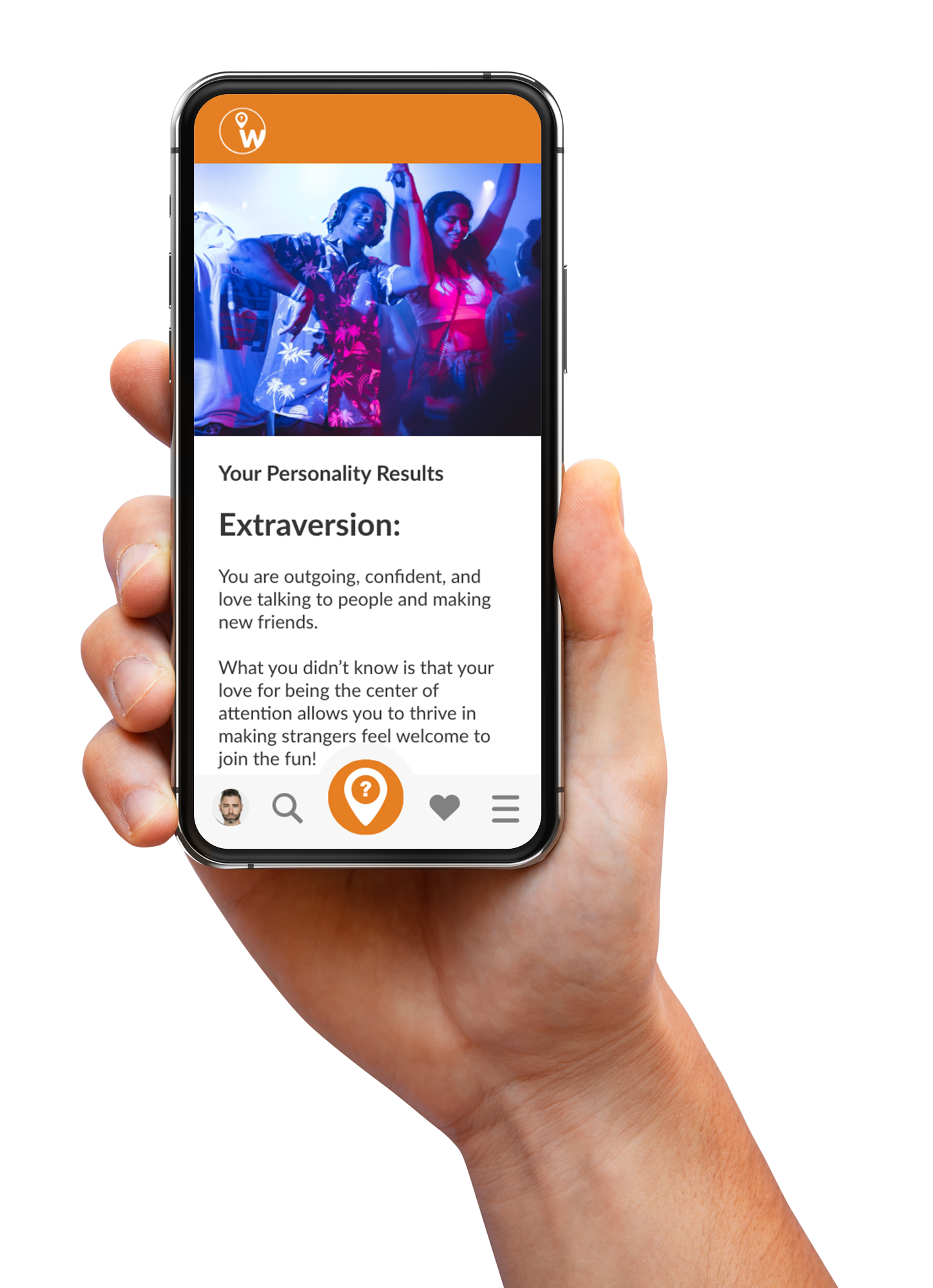
WAIDT is a unique travel and event application that combines the best features of traditional travel planning apps with the convenience of event discovery platforms like Eventbrite. Built on a personality-driven approach, WAIDT tailors recommendations based on user preferences and psychological traits. Upon sign-up, users complete a personality survey, categorizing them based on Openness, Extraversion, Neuroticism, and Conscientiousness, ensuring a highly personalized experience.
WAIDT is currently in its very early stages. We will be engaging users once the application is set for testing to gather feedback and enhance
the user experience.
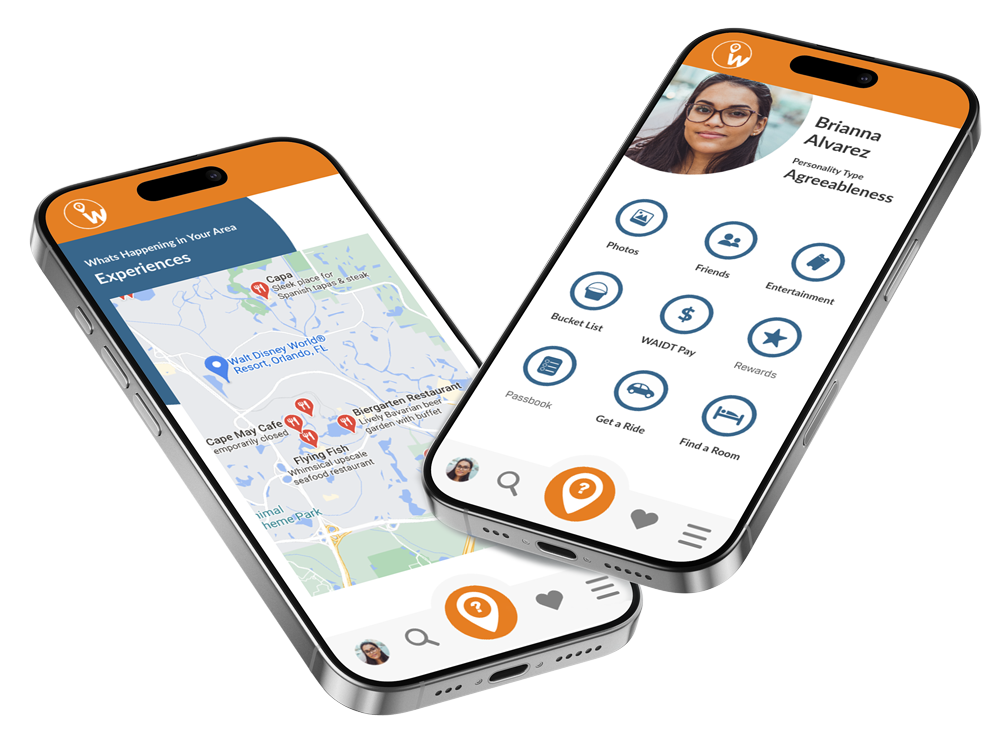
Travelers often struggle to find experiences that truly match their personal interests, energy levels, and social preferences. Most travel and event platforms take a one-size-fits-all approach, offering broad, generalized recommendations that fail to consider individual differences.
How WAIDT Solves This Problem:
- Personalized Travel Itineraries – Users receive curated trip plans tailored to their personality type, ensuring an experience that aligns with their interests and travel style.
- Smart Event Suggestions – The app recommends events, activities, and experiences that match the user’s preferences, whether they seek adventure, social gatherings, or relaxation.
- Social Opportunities – WAIDT fosters connections by suggesting group-friendly activities, networking events, and local meetups, making it easier for like-minded travelers to engage.
- AI-Driven Customization – The platform continuously learns from user behavior, refining recommendations to create a more personalized, dynamic travel experience.
By prioritizing psychology-based personalization, WAIDT transforms how users discover and plan their trips, making travel more engaging, relevant, and fulfilling.
User Personas
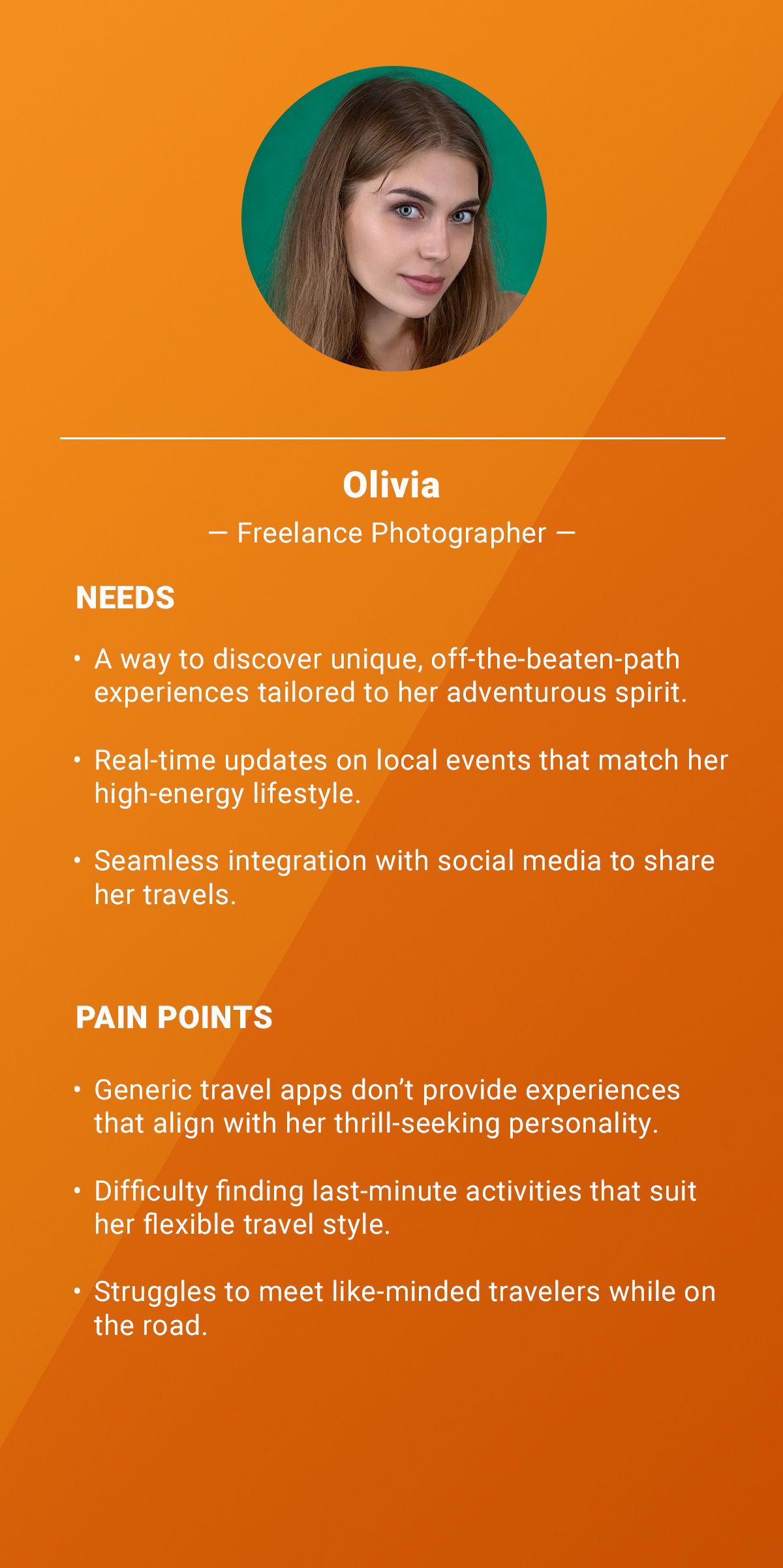
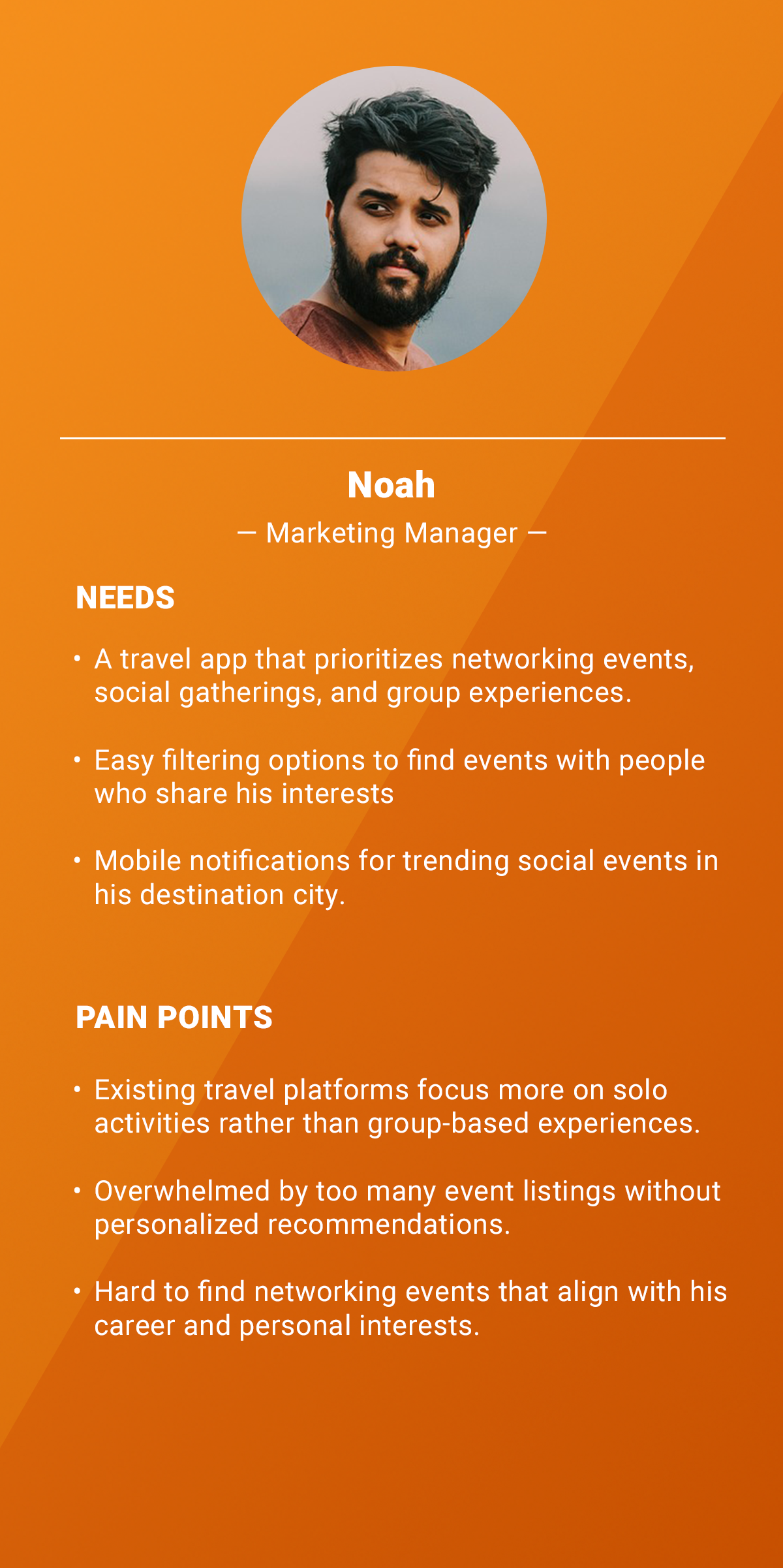
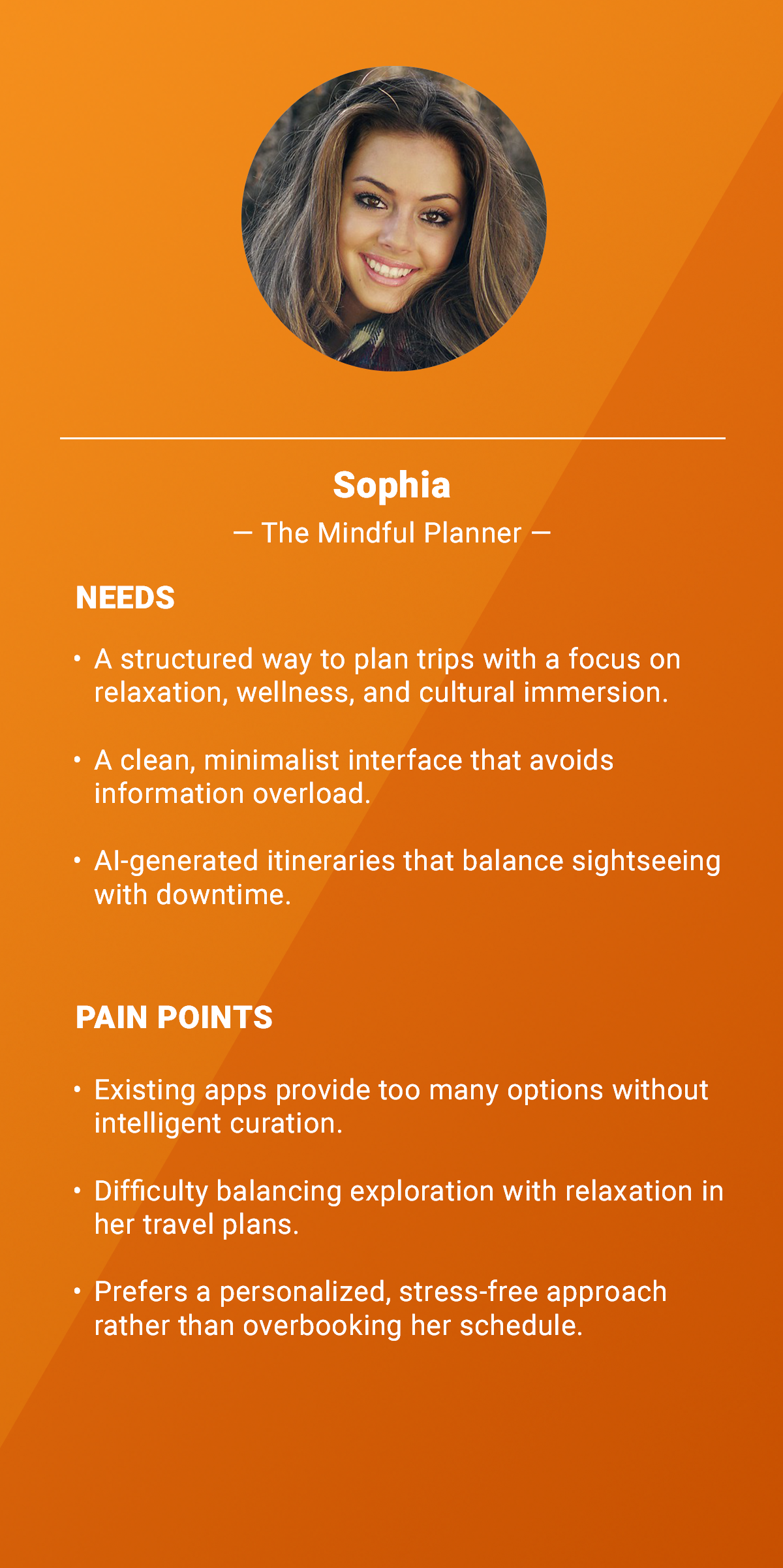
Since live users were not available for testing, personas were created to simulate realistic user needs and behaviors.
Online Trends and Booking Behavior
Trend |
WAIDT |
| Mobile-First Demand | App Focused design aligns with 65% of travel bookings via smartphones. |
| Spontaneous Travel | Curates last minute experiences for users who book trips 1 week in advance. |
| Personalization | AI tailors recommendations., personality driven lists, filling a gap left by generic OTAs/apps. |
| Post-Pandemic Exploration | Focus on Exploring the post-pandemic world “taps” in up demand for novel experiences. |

Competitive Advantages vs. OTAs, Traditional Agencies, and Travel Apps
Feature |
WAIDT |
Competitor |
| Personalization | Dynamic personality based AI+customization (swap/replace options). | OTAs/apps use basic algorithms (e.g.,booking.com). |
| Experience Curation | Focuse on activities (not just flights/hotels) with exclusive partner deals. | Most OTAs prioritize accommodation flights. |
| Transportation | Integrated Uber/Lyft solves “last-mile” logistics. | Rare OTA; apps like trip advisor lack integration |
| Budget Management | Built in cost tracking to for expenses. | OTAs lacks holistic budget features. |
| Time Efficiency | Reduces 8+hours of research to minutes | User still spend 15-20 hours across platforms. |

Target Audience
- Customization: “Swap Out” AI Suggestions to retain control
- Convenience: All-in-one platform for experiences + transportation.
- Value: Deals from fun partners and budget tools
- Novelty: Unique, personality-tailored activities
Demographic Breakdown
- Millenials/Gen Z: 70% prefer apps; value spontaneity and social media-worthy experiences.
- Families: Age-inclusive options simplify planning
for diverse interests. - Businesses: Fun partners gain targeted exposure to
engaged travelers.
Market Gaps Exploited
- Experience Overload: Most travelers feel overwhelmed by fragmented activity research (Google, blogs, etc.). WAIDT consolidates this.
- Impersonal Algorithims: Competitors lack WAIDT’s granular personalization (e.g., personality traits + real-time customization).
- Businesses: Fun partners gain targeted exposure to engaged travelers.
- Local Business Visibility: Small vendors struggle to reach tourists; WAIDT’s B2B model connects directly.
Challenges and Mitigation Strategies
Challenge |
Mitigation |
| Competing with OTAs | Focus on WAIDT’s unique niche (experiences vs. bookings). |
| User Trust | Highlight partnerships (Uber/Lyft verified fun partners) and customization. |
| Monetization | Leverage B2B revenue (ads/sponsorships from fun partners). |
Design Process & UX Considerations
Research and Competitive Analysis
-
Studied leading travel and event apps to identify gaps in personalization.
-
Conducted interviews to understand how personality traits influence travel decisions.
Wireframing & Prototyping
- Created low-fidelity wireframes focused on personalized recommendations.
- Iterated based on usability best practices and behavioral
psychology insights.
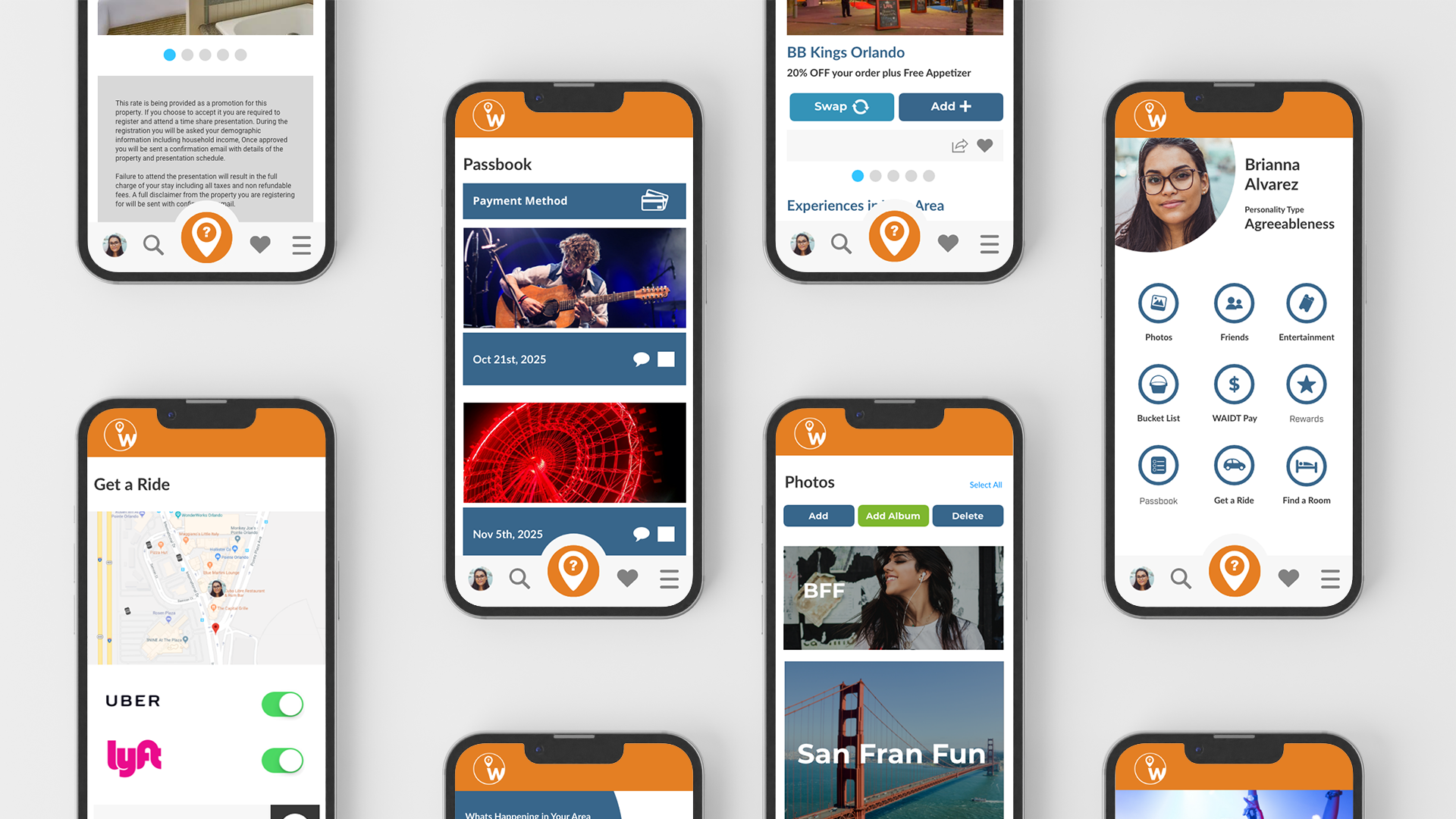
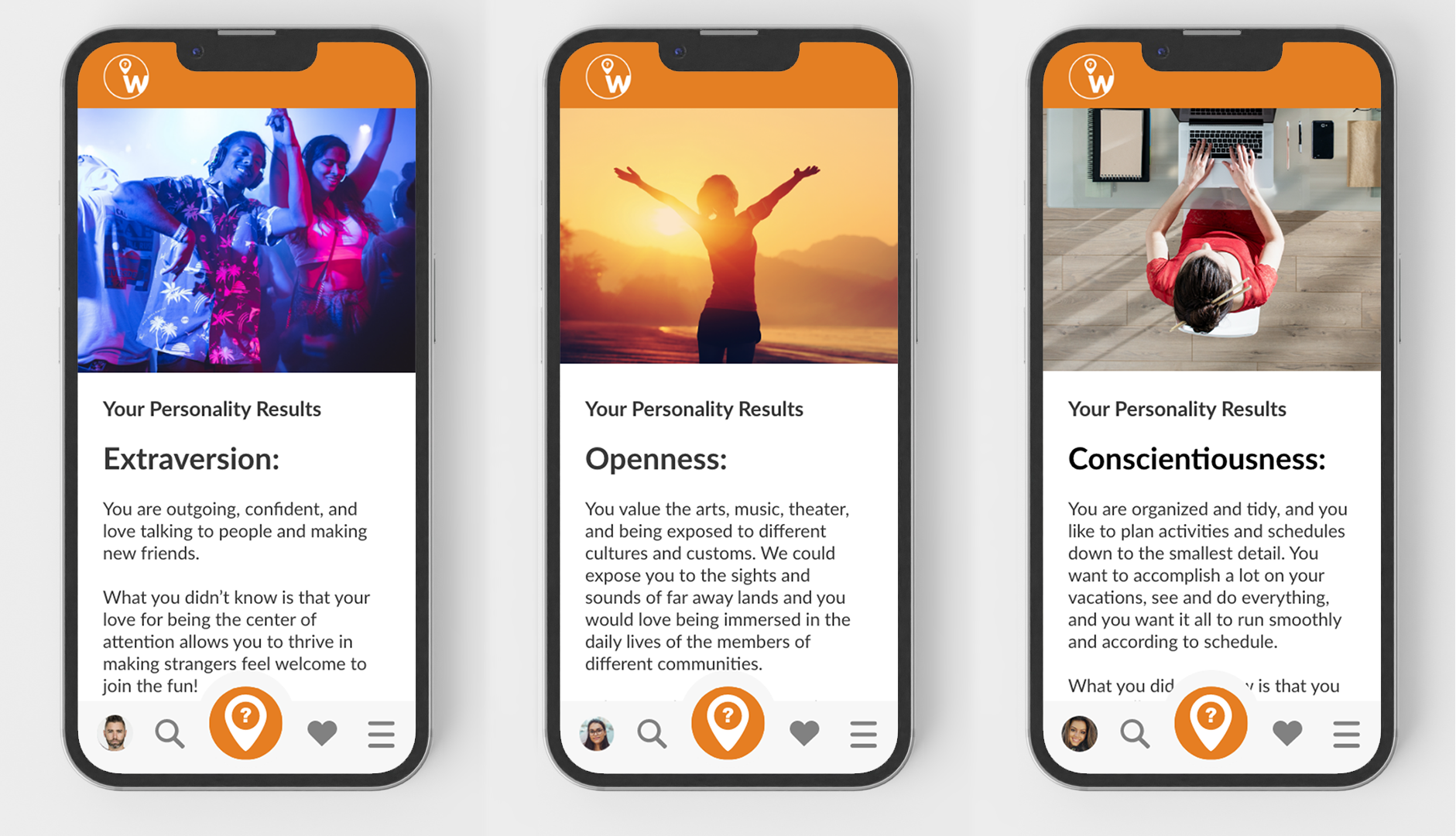
Personality-Driven UI Designs
-
Implemented a personality-based recommendation engine to tailor experiences.
-
Designed an intuitive onboarding flow that assigns users to personality groups.
-
Developed dynamic event filtering based on personal preferences.
User Flow Simulation
- Mapped out Olivia’s journey from spontaneous event discovery to ticket booking.
- Simulated Noah’s experience attending networking events and connecting with peers.
- Tested Sophia’s workflow for planning a balanced, mindful vacation itinerary.
Strategic Recommendations
- Amplifiy AI Uniqueness: Market the “personality-driven” algorithim as a USP (e.g., your trip, your personality)
- Leverage Social Proof: Encourage users to share customized iteneraries on TikTok/Instagram.
- Sustainability Angle: Add filters for eco-friendly activities to align with Deloitte’s 2023 trends.
- Gamfication: Reward users for trying new experiences (e.g., badges, discounts).

Conclusion
WAIDT redefines the travel experience by prioritizing personalization, social connection, and intelligent event discovery. By leveraging psychology-based insights, it offers users tailored recommendations that fit their unique preferences. Future developments will enhance AI capabilities and expand features to further optimize user engagement and trip customization.